CARBON DIOXIDE
Carbon dioxide (CO₂) is a gas we exhale. It builds up in the home when there is no mechanical ventilation for fresh outdoor air. Poor ventilation has a great impact on health, comfort, and performance. It can lower cognitive function, increase risk of airborne disease transmission, headaches, fatigue, and allergy-like symptoms.

“Six studies reported an association between CO2 and decreased cognitive performance at concentrations in the range of 1000 ppmv…”
“Gaseous carbon dioxide is an asphyxiant. Concentrations of 10% (100,000 ppm) or more can produce unconsciousness or death. Lower concentrations may cause headache, sweating, rapid breathing, increased heartbeat, shortness of breath, dizziness, mental depression, visual disturbances or shaking.”
“As CO₂ increases, there may be an increased risk of:
- mucous membrane or respiratory symptoms (e.g., eye irritation, sore or dry throat, stuffy, congested or runny nose, sneezing, coughing, and rhinitis)
- decreased test performance (e.g., decision‑making, task performance, standardized test scores)
- neurophysiological symptoms (such as headache, tiredness, fatigue, dizziness or difficulty concentrating)”
WHY CARBON DIOXIDE TESTING IS IMPORTANT
It Decreases Brain Function
Studies have found that even in buildings where the carbon dioxide levels are at elevated but acceptable levels, CO2 decreases brain function.
Modern Homes Pose More of a Risk
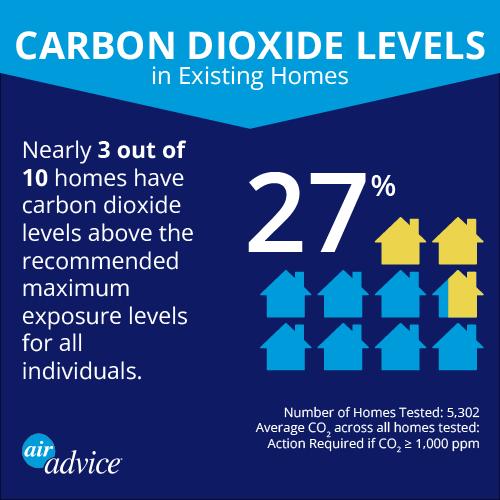
Many modern, energy-efficient homes are tightly sealed and do not have the proper ventilation to recycle the indoor air, letting gasses and stale air build up in the home. So even with a modern home, it could be causing a build up of CO2 leading to mucous membrane and respiratory symptoms such as cough, runny nose, dry/sore throat, eye irritation, and sneezing.
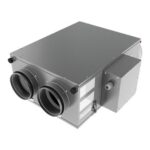
Increase ventilation: heat or energy recovery ventilator (HRV/ERV), fresh air supply vent or ventilating dehumidifier.
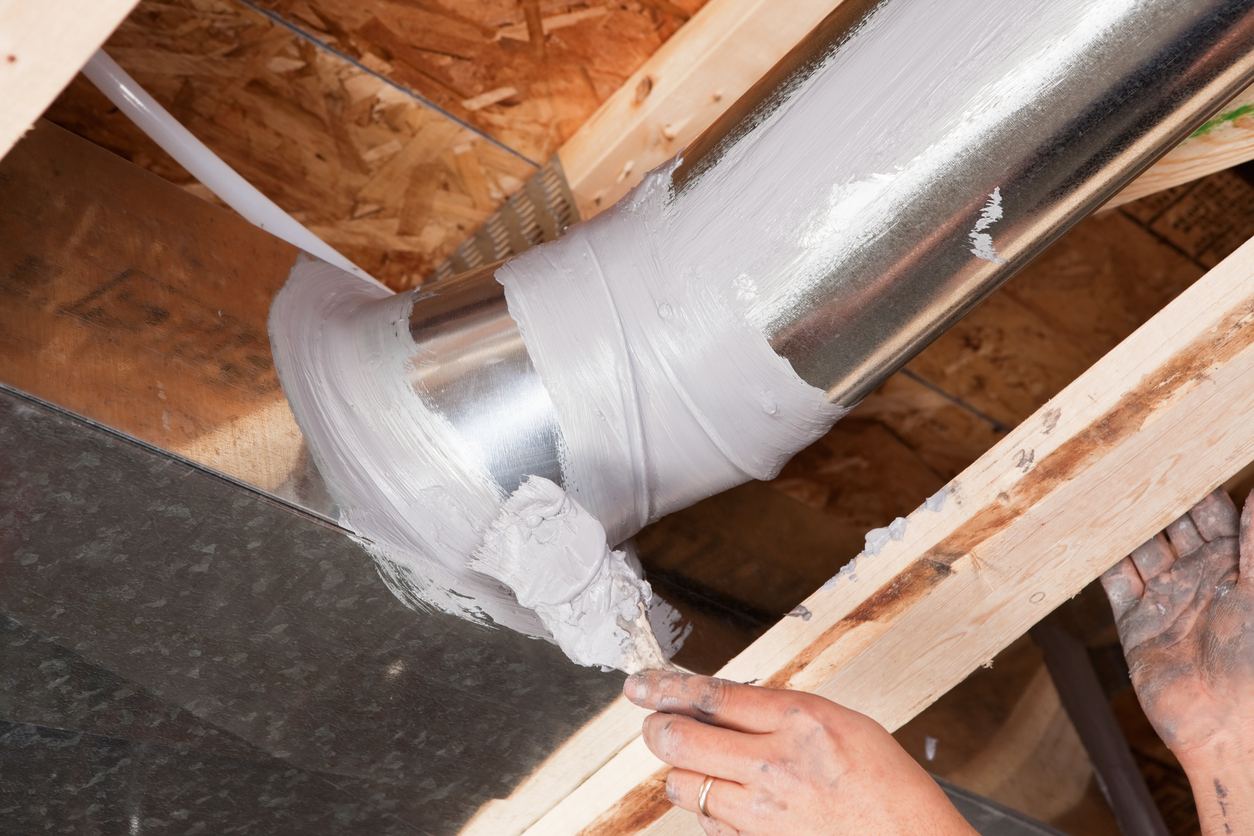
Inspect your ventilation system to ensure performance and adjust as needed.

Install a fresh air supply vent, or exhaust-only ventilation.
AIRADVICE PROTIP:
A “tight” or well-sealed home is great for energy efficiency, but it can trap stale air and lead to a buildup of pollutants. Simply put, natural ventilation is not enough. The most effective long-term solution is a mechanical ventilation system. Heat Recovery Ventilators (HRVs) and Energy Recovery Ventilators (ERVs) are the gold standard for modern homes. They continuously exhaust stale, polluted air and replace it with fresh air from outside. Enjoy all the energy savings and a healthy home. 👍
Ask your contractor about these solutions.
AirAdvice tests for 7 different parameters in the home with our top-of-the-line monitor. Our monitors are designed and maintained to produce clear and accurate results, giving you a clear picture of the state of your home’s air.
Scroll down to learn more about the health, comfort, safety IAQ parameters that we test for in the home.